


Early life

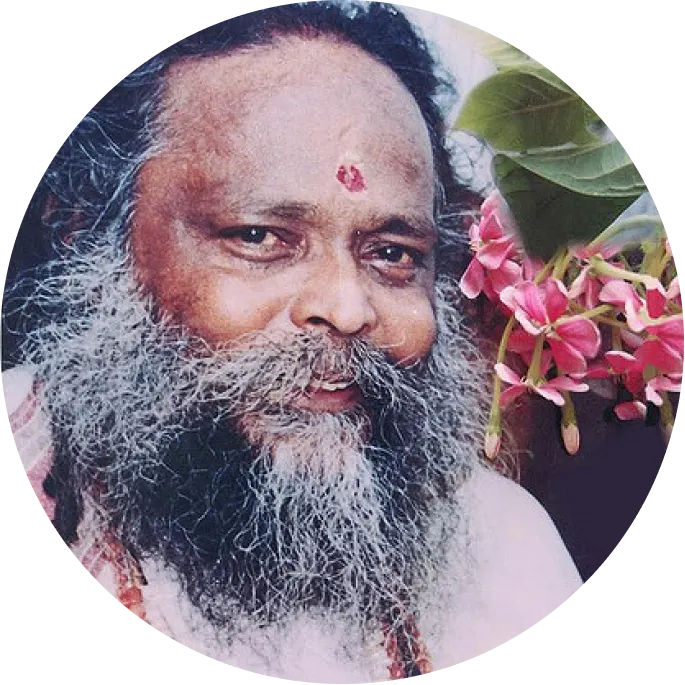
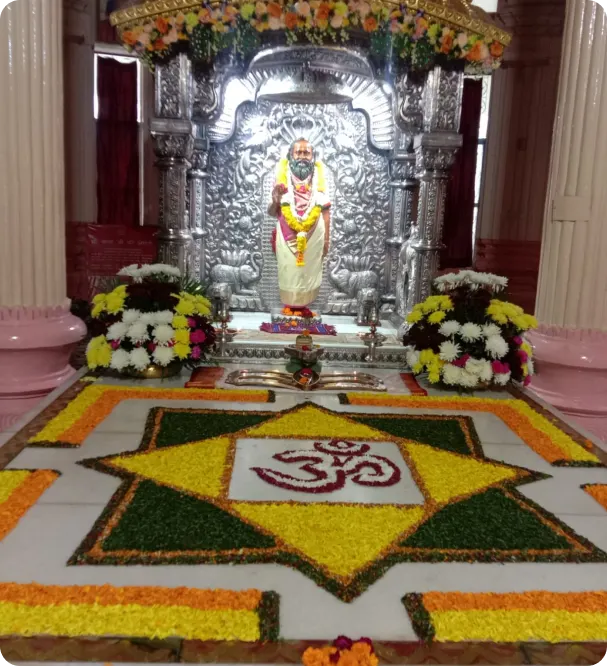
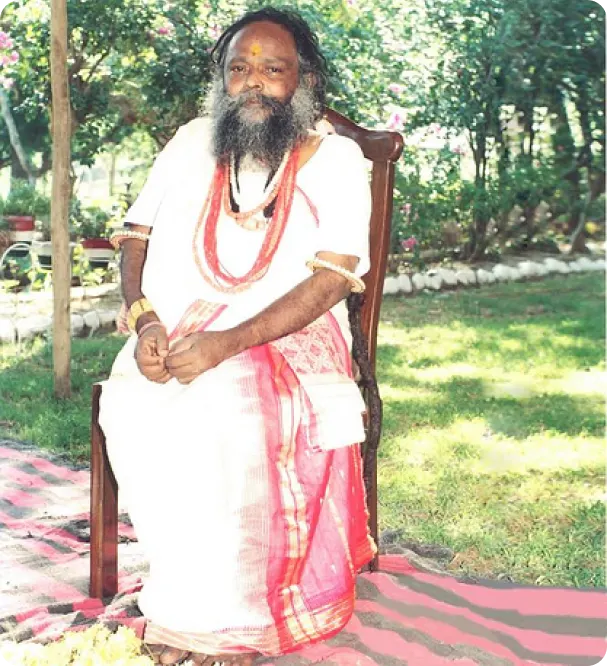
Baba Nagpal Ji was born in 1883. He came from a humble family, but his devotion to the Mother Goddess was extraordinary. From childhood, he had a deep interest in spiritual matters and would spend hours immersed in meditation and worship.

His primary purpose in life was the service of the Mother Goddess and the welfare of humanity. He received initiation from his guru and attained spiritual heights through rigorous austerities.

Arrival in Chhattarpur

Baba became a sanyasi and was cared for, educated, and trained by sadhus. He traveled throughout India, visiting various pilgrimage sites. His travels extended to the mighty Himalayas, the cool Tibetan plateau with its sacred Kailash and Mansarovar, the mountains and valleys of the north-east, and the sacred places of the north and south. He spent several years in Kashmir, after which, inspired by Goddess Durga, he moved to Delhi.

In Delhi, he first spent some time in Arjun Nagar and built a beautiful temple there. He then came to the Durga Ashram near Chhatarpur village (now part of the Shaktipeeth and about a kilometer from the present site). Finally, in the mid-seventies, he moved to the present site, which at that time was a rugged wasteland, overgrown with wild bushes and thorny plants.
Baba's vision of Shaktipeeth comes true

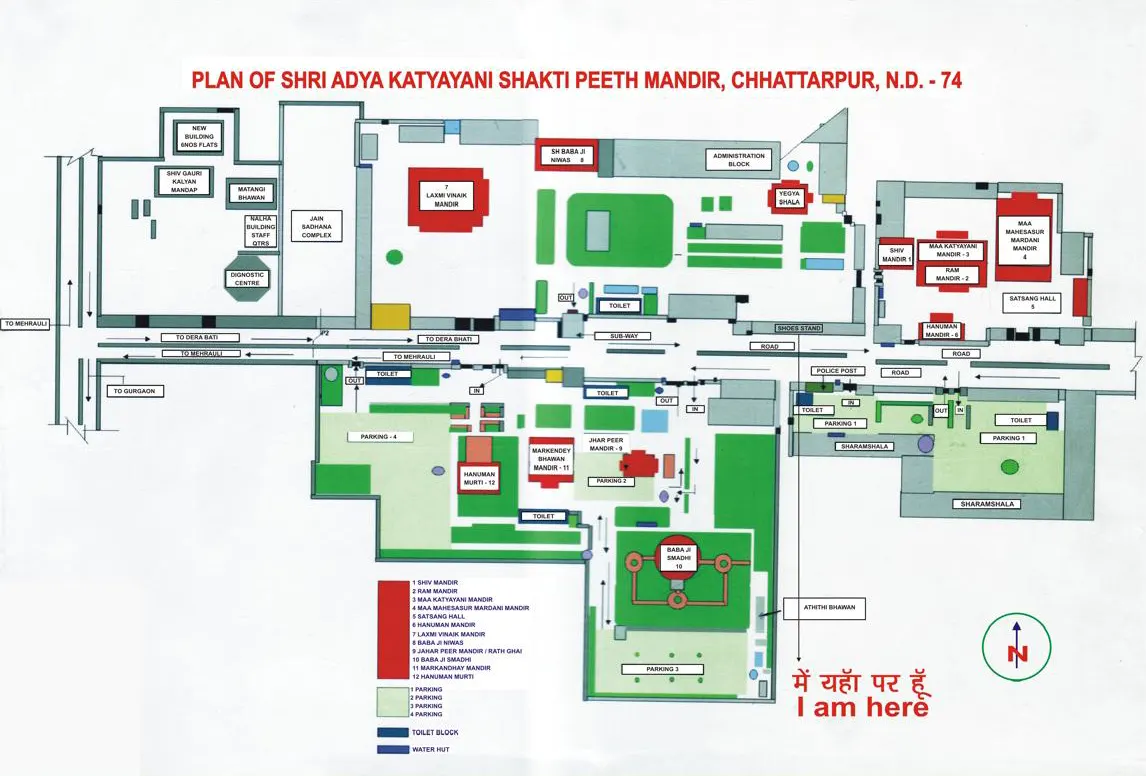
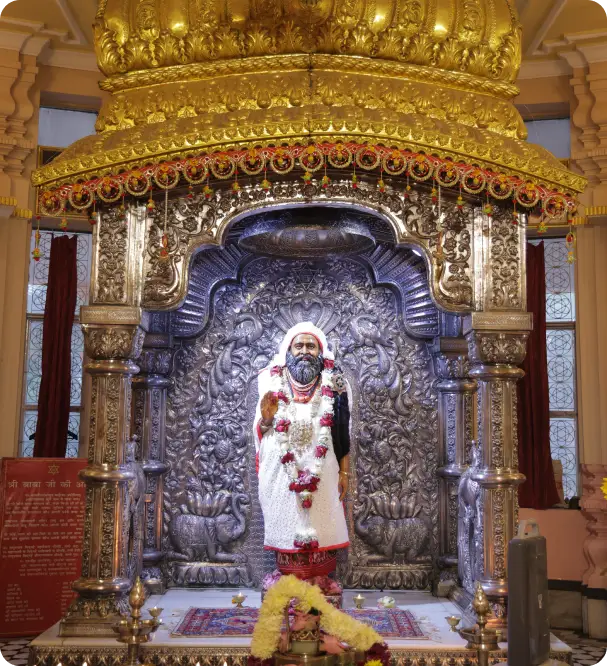
Devotees began to gather around Baba, and this Shaktipeeth began to take shape – every detail of which was personally designed by Baba. In the initial days of construction, Baba personally carried bricks on his shoulders. It is a remarkable miracle of Mother Durga’s divine grace and Baba’s unwavering will and tireless efforts that this Shaktipeeth grew from nothing to a sprawling temple city spanning 70 acres within three decades. Plots of land were purchased in stages – all duly paid for, and proper receipts and records were preserved.

These buildings reflect the diverse architectural styles of different regions of the country. This Shaktipeeth is dedicated to the worship of the almighty and omnipresent Goddess Katyayani, the heroine of the universe. Its construction and development were primarily based on the collective, selfless, and anonymous donations and labor of all devotees – both wealthy and ordinary.

Baba's mission

The ideal of personal salvation did not appeal to Baba’s compassionate nature. He used to tell his devotees that the purpose of his life was to remove the veil of superstition and ignorance from the minds of the common man and show him the true, pure, and unchanging form of Sanatan Dharma – India’s unique gift to the world – and to spread the message of tolerance, brotherhood, and patriotism. For him, serving the needy was the true form of religion.

Shaktipeeth is the home of Goddess Durga, and Baba never allowed any devotee to return without food, refreshments, or the fulfillment of his or her needs.

Story of the construction of the temple

1

Start

Baba started from a small hut in 1974. He had no resources, but he had unwavering faith in the Mother.

2

Expansion

Gradually, devotees gathered support and the temple began to expand. One by one, several temples were built.

3

Greatness

Today it is the largest temple complex in Delhi, spread over 70 acres and attracting millions of devotees.

Baba's Teachings

  • "True devotion is that which is selfless and is done with devotion towards the mother."
  • "Serving humanity is truly serving the Mother. Those who serve the poor and the needy please the Mother."
  • "All religions are one, all have the same goal – attainment of God."
Social service and contribution

Baba Nagpal ji not only built a temple but also established a complete social service centre.

Free Food

Free food is provided to thousands of devotees every day.

Education

Providing free education to poor children

Healthcare

Free medical camps and medicines

Spiritual guidance

Inspiration to devotees to follow the spiritual path